Scenario Briefing
12 Angry Men
Eleven men want to convict and go home. You just think they should talk about it first.
360° world view
Render an immersive panorama of this world. One-time generation, cached for every visitor.
Before You Begin
Juror #8, an architect, the lone dissenting voice in a jury that voted 11-to-1 for guilty
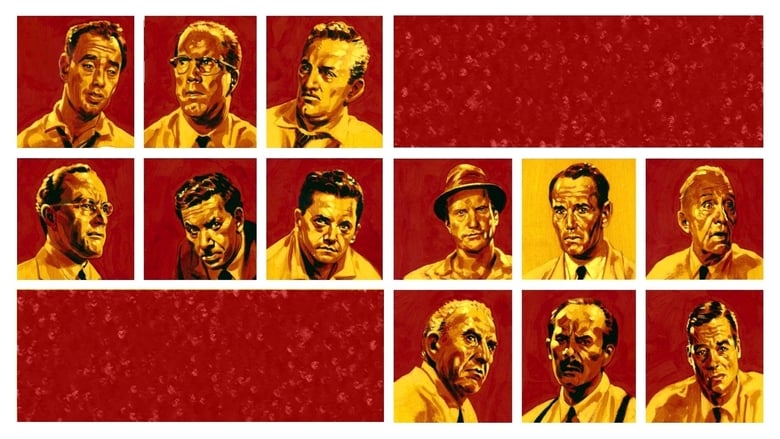
You are Juror #8, an architect by profession, a quiet man who listens more than he talks and builds things for a living — including, today, an argument for reasonable doubt. You sat through a six-day trial in which an eighteen-year-old boy from the slums was accused of stabbing his father to death. The prosecution presented what seemed like an airtight case: an eyewitness who saw the killing through the windows of a passing elevated train, an old man downstairs who heard the boy shout 'I'm going to kill you' and saw him running down the stairs, and a unique switchblade knife that matched the murder weapon. The defense attorney was court-appointed and barely tried. When the judge sent the jury out, you could feel the room's impatience — eleven men were ready to vote guilty and get on with their lives. You voted not guilty. Not because you're sure the boy is innocent. Because you're not sure he's guilty. Because a boy's life is at stake, and you think the evidence deserves more than five minutes of discussion. You are alone in this room, and every man at the table thinks you're wasting their time.
The Situation
The New York County Courthouse is a massive neoclassical building in downtown Manhattan, all marble columns and carved inscriptions about justice and law. The jury room on the upper floor is a different story: a long rectangular room with a conference table, twelve chairs, a water cooler, and windows that look out over the city skyline. There is a fan on the ceiling that doesn't work. The walls are institutional green. The table is scarred with cigarette burns from a thousand previous deliberations. It is the most ordinary room in the world, and today it is the most important room in the world, because twelve men are about to decide whether an eighteen-year-old boy from the slums is guilty of first-degree murder. The case seems open and shut: the boy had a motive (his father beat him), he had a weapon (a switchblade knife), and two eyewitnesses place him at the scene. The prosecution was confident. The defense was perfunctory. Eleven of the twelve jurors are ready to vote guilty and go home. One man — you — is not sure. Not sure the boy is innocent. Just sure that the evidence deserves a conversation before they send a kid to the electric chair.
Your Objectives
Ensure the defendant receives a fair deliberation — not a five-minute rubber stamp on the way to the electric chair
Systematically re-examine the prosecution's evidence, piece by piece, and expose the assumptions the other jurors are making
Persuade enough jurors to create reasonable doubt — you don't need to prove innocence, only that conviction is not certain
Navigate the personal dynamics of eleven very different men, each with their own reasons for voting guilty, and find the argument that reaches each one
The Cast
6 charactersPlaystyle Profile
Reviews
No review yet?
Be the first to share your thoughts on this scenario.
Quick Facts
- Era
- July 1957 — a hot summer afternoon in New York City. The civil rights movement is stirring. Class and ethnic tensions simmer beneath the surface of postwar prosperity. The American justice system promises that every defendant is presumed innocent until proven guilty, that the burden of proof rests with the prosecution, and that a verdict must be unanimous. Today, twelve ordinary men will test whether that promise means anything.
- Location
- New York County Courthouse — Jury Room
- Starting Position
- Jury Room
- Playable Leader
- Davis
- Game Systems
- Drama, Thriller, Legal