Scenario Briefing
The Reformer's Gamble
You opened the system to save it. Now the hardliners want you gone, the republics want out, and the Union is fracturing faster than you can hold it together.
360° world view
Render an immersive panorama of this world. One-time generation, cached for every visitor.
Before You Begin
General Secretary of the Communist Party and chief architect of Soviet reform during the unraveling of the Union
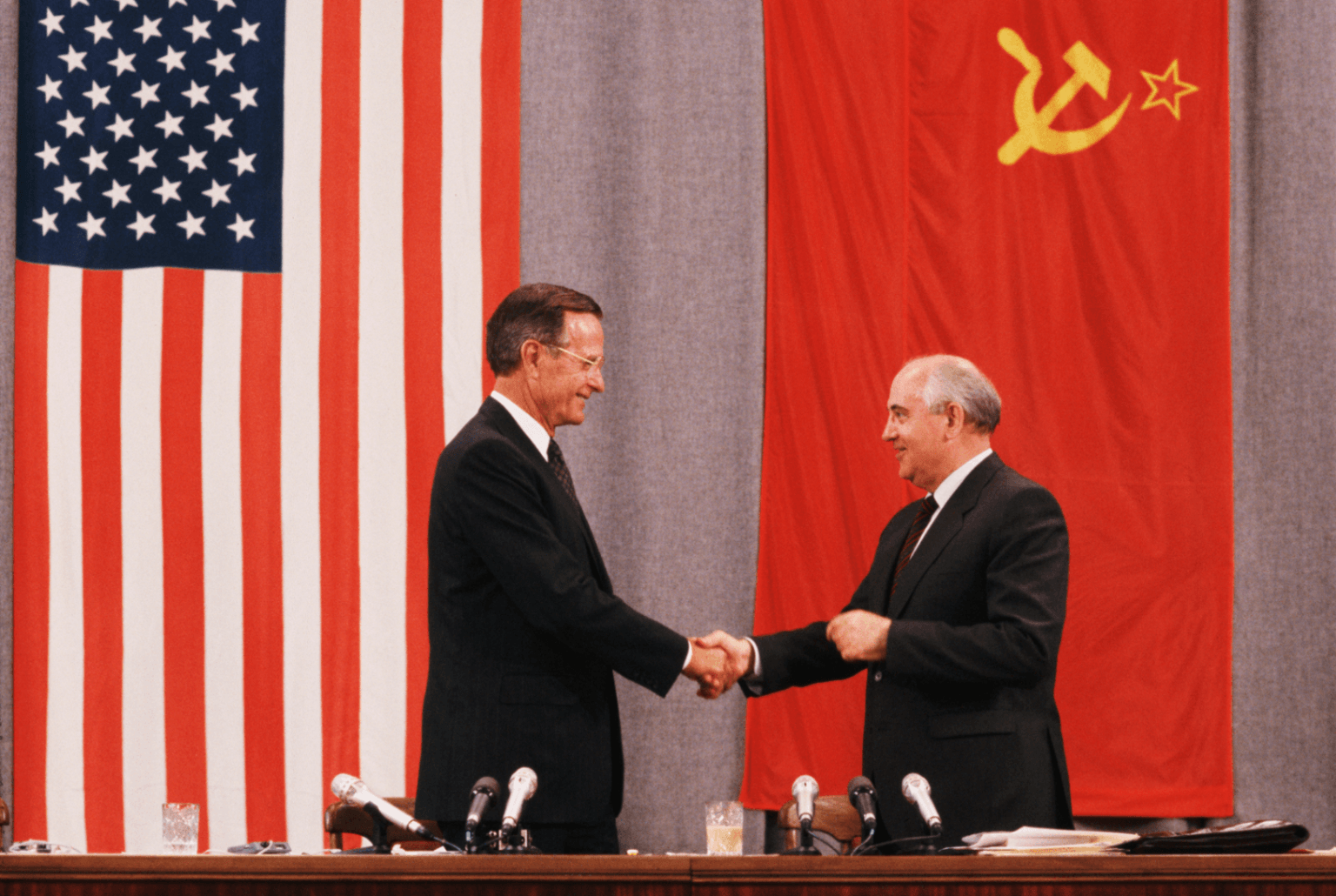
You are Mikhail Gorbachev. When you came to power in 1985, you did not intend to destroy the Soviet system. You intended to save it from decay: stagnation, corruption, bureaucratic inertia, technological backwardness, the Afghan burden, and a political culture that had forgotten how to tell the truth about its own failures. Perestroika was meant to restructure the economy. Glasnost was meant to expose enough reality that the system could renew itself. Democratization was meant to make socialism governable again. Instead, each reform opened a chamber of pressure that had been sealed for decades. The press became bolder than the Party. The republics became bolder than Moscow. Reformers demanded more than you planned to give; hardliners blamed you for everything you had already given away. In the West, you are hailed as the statesman ending the Cold War. At home, many people blame you for shortages, confusion, humiliation, and the collapse of certainty. Tonight the question is no longer whether the Union needs reform. It is whether reform has created a pace of political change that no center can govern.
The Situation
The Soviet Union is still a superpower on maps, in treaties, and in nuclear arithmetic, but the political reality underneath the map is changing by the month. Communist governments in Eastern Europe have fallen without Soviet tanks restoring them. The Berlin Wall has opened. The command economy is sputtering into shortages, hoarding, and public anger. Glasnost has transformed censorship into argument, and argument into legitimacy crisis. Inside the Union, the Baltic republics are pushing toward independence, Russia itself is developing its own political center of gravity, and party authority is thinning into ceremony even before it is formally reduced. Every institution remains large, armed, and dangerous. Every institution also increasingly knows it may not survive intact. You are trying to preserve the Union by changing it, but each concession creates new actors, new demands, and new opportunities for your enemies to claim that only force, reversal, or your removal can hold the state together.
Your Objectives
Reform the Soviet system enough to preserve it without triggering outright collapse or civil fracture
Balance hardliners, reformers, republic leaders, and foreign counterparts who all think time favors them more than it favors you
Prevent the Union from dissolving before a new constitutional and political settlement can replace the old order
The Cast
7 charactersPlaystyle Profile
Reviews
No review yet?
Be the first to share your thoughts on this scenario.
Quick Facts
- Era
- March 1990 through December 1991, compressed into a continuous crisis of reform, sovereignty, and regime survival
- Location
- The Kremlin and the Dissolving Union
- Factions
- Communist Party of the Soviet Union vs Committee for State Security (KGB) vs Russian Soviet Federative Socialist Republic
- Starting Position
- Kremlin General Secretary Office
- Playable Leader
- Mikhail Gorbachev
- Game Systems
- Political, Historical
- Recommended For
- Story