Scenario Briefing
Red Frontier
94 colonists. 5 months of food. 8 months until rescue. Someone is making sure you don't make it.
360° world view
Render an immersive panorama of this world. One-time generation, cached for every visitor.
Before You Begin
Colony Commander of Ares Station — former NASA astronaut, responsible for the survival of ninety-four people on a planet that is trying to kill them
You spent fifteen years training for this. Astronaut selection at thirty, ISS rotations, the Lunar Gateway deployment, the eighteen-month Mars transit simulation at Johnson Space Center. You were chosen for Colony Commander not because you were the best pilot or the best scientist — there were candidates who were better at both — but because you were the person the selection board trusted to hold ninety-four people together when everything went wrong. They were right about the everything-going-wrong part. Seven months into the mission, Ares Station was running smoothly. The greenhouse was producing supplemental calories. The mining operation was on schedule. Morale was high. Then the Prometheus failed, and the math changed overnight. Five months of food. Eight months until rescue. Oxygen recyclers degrading. And the equipment failures that Chief Engineer Chen Wei quietly told you do not look like accidents. You are standing at the observation viewport in the command module, watching the point in the sky where the Prometheus should have appeared as a growing dot of light. There is nothing there. The station is quiet with the particular silence of ninety-three people waiting for you to tell them what happens next. You are not sure what you are going to say. But you know that whatever it is, they will believe it if you say it like you believe it. That is the job. That has always been the job.
The Situation
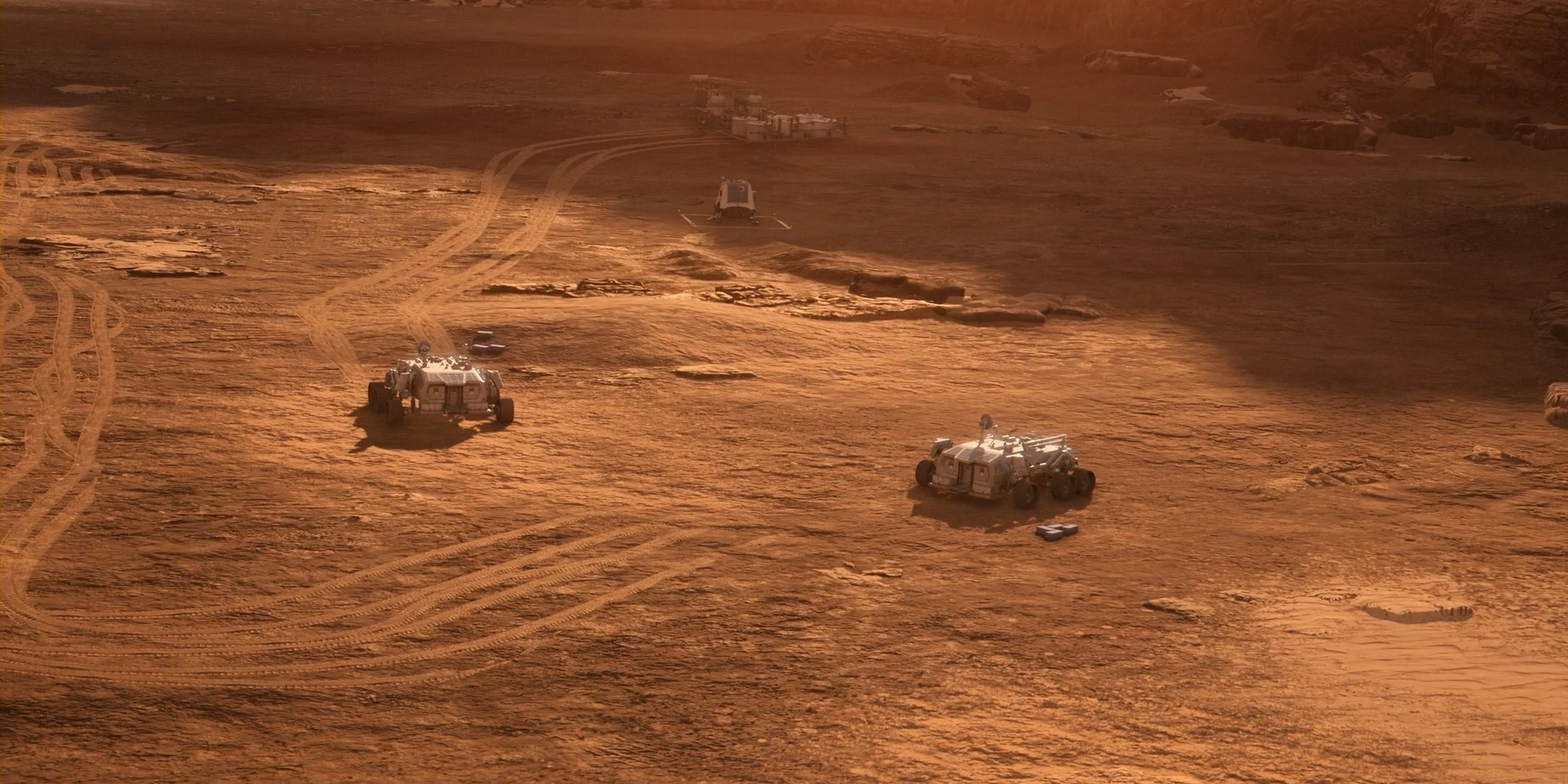
Ares Station is humanity's first permanent settlement on Mars — a cluster of connected pressurized habitat modules on the flat volcanic plains of Acidalia Planitia, roughly 30 degrees north latitude. The station was built over two years by robotic precursor missions and the first crewed landing, funded jointly by NASA, ESA, and Helios Dynamics, a private aerospace corporation that contributed sixty percent of the mission budget in exchange for mineral exploitation rights. Ninety-four colonists arrived in three waves: the first sixteen were engineers and scientists who activated the station, the second forty were specialists and support crew, and the final thirty-eight included researchers, a journalist, a corporate liaison, and families. The station was designed to be resupplied every thirteen months during optimal Earth-Mars transfer windows. The first resupply ship, the Prometheus, launched on schedule from Earth orbit six weeks ago carrying eighteen months of food, replacement parts for the oxygen recyclers, medical supplies, and additional hab modules. Twelve hours ago, a debris impact during a course correction maneuver destroyed the Prometheus's cargo module. The ship's crew survived and is returning to Earth, but every gram of supply intended for Ares Station is now expanding into a cloud of fragments somewhere between the orbits of Earth and Mars. The next launch window is eight months away. Ares Station has food for five months at current consumption. Two of the four oxygen recycling units are operating below rated capacity and degrading. The station's greenhouse dome is producing supplemental calories but cannot scale fast enough to close the gap. And in the last three weeks, three separate equipment failures have occurred in patterns that do not match wear-and-tear projections. Someone on the station is sabotaging critical systems. You are the Colony Commander — a former NASA astronaut who trained for fifteen years for this mission. Ninety-three people are looking at you. The math does not work. And now you have to make it work anyway.
Your Objectives
Keep ninety-four people alive for eight months on five months of food and failing oxygen recyclers
Identify the saboteur and stop the equipment failures before a critical system fails beyond repair
Navigate the political fractures — corporate pressure, democratic dissent, military authority — without the colony tearing itself apart
Decide how to allocate impossible resources: food versus oxygen, greenhouse versus engineering, science versus survival
Manage Earth — mission control, the media, and the political forces that will determine whether a rescue mission is even attempted
The Cast
11 charactersPlaystyle Profile
Reviews
No review yet?
Be the first to share your thoughts on this scenario.
Quick Facts
- Era
- September 2031, seven months into humanity's first permanent Mars colonization mission
- Location
- Ares Station — Acidalia Planitia, Mars
- Factions
- Ares Station Command vs Helios Dynamics Corporate Division vs Colonist Council
- Starting Position
- Command Module
- Playable Leader
- Colony Commander of Ares Station — former NASA astronaut, responsible for the survival of ninety-four people on a planet that is trying to kill them
- Game Systems
- Sci-fi, Thriller, Survival
- Recommended For
- Story